
My Training Partner and I Got Our Blood Tested. Here's What We Found.
Hannah and I have been running together long enough that we finish each other's sentences and each other's aid station snacks. This August, we're toeing the start line of a 50k circumnavigating Mount Saint Helens together, which means we've been ramping up volume, stacking back-to-back long runs, and, lately, having one conversation on repeat: Why do we feel this brain fog? Why is everything kind of heavy?
We're both non-elite but enthusiastic multisport athletes who spend a ridiculous amount of time planning out our trail adventures. We eat our veggies, take our supplements, and prioritize 8 (or 9) hours of sleep. And yet, we’ve both been working through sluggishness recently that’s making us wonder if something isn’t quite right, under the surface.
So when Superpower reached out and offered me a baseline blood panel with 100+ biomarkers, I said yes, and immediately texted Hannah to see if she'd want to get her blood tested, too. (Obviously, it was a yes.)
I’m a vegetarian, and Hannah’s gluten-free. So we both know diet plays a role. But what we really wanted to learn was whether our high training volume was depleting us in ways that a standard annual physical wouldn’t catch. Here’s what we learned.
What the Superpower Panel Actually Is
The Superpower baseline panel covers over 100 biomarkers across categories like iron, thyroid, hormones, metabolic function, and inflammation. You can draw at a Quest Diagnostics lab near you or schedule an at-home draw. Since I’m in a rural area, I had to drive an hour to Quest, but the appointment itself took less than 10 minutes.
Within 3 business days I had my results! It was a totally different interface than I’ve ever seen before in a blood panel. The results don't arrive in a confusing PDF with flagged numbers and a reference range. They come with a synthesis that explains what each result means in plain language, what might be causing it, how it could be affecting how you currently feel, what happens if left unaddressed, and how long it typically takes to see a difference with supplements or lifestyle changes.
The only biomarker I noticed was missing that I would’ve loved to see was B12. It's been in other baseline panels I've had in the past, and historically mine runs low. Without it here, I can't compare where I am now to where I've been, but I could have upgraded to add it to my panel. Next time!
My Results: The Good, The "Huh," and the One I'm Actually Doing Something About
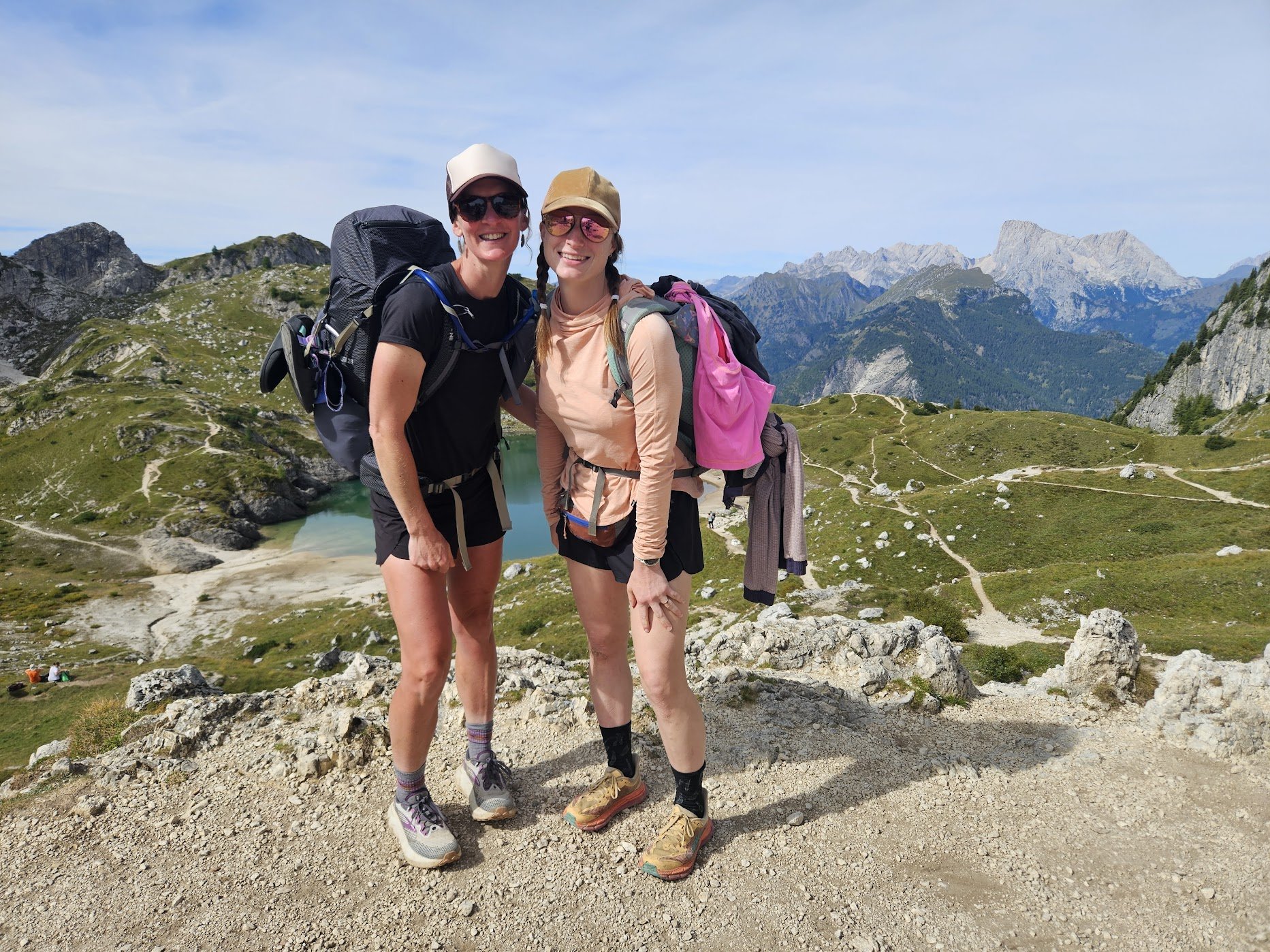
Most of my panel looked solid. My “biological age” is 5 years younger than me! Inflammation and metabolic markers came back clean. The three markers I expected to be low, were indeed low.
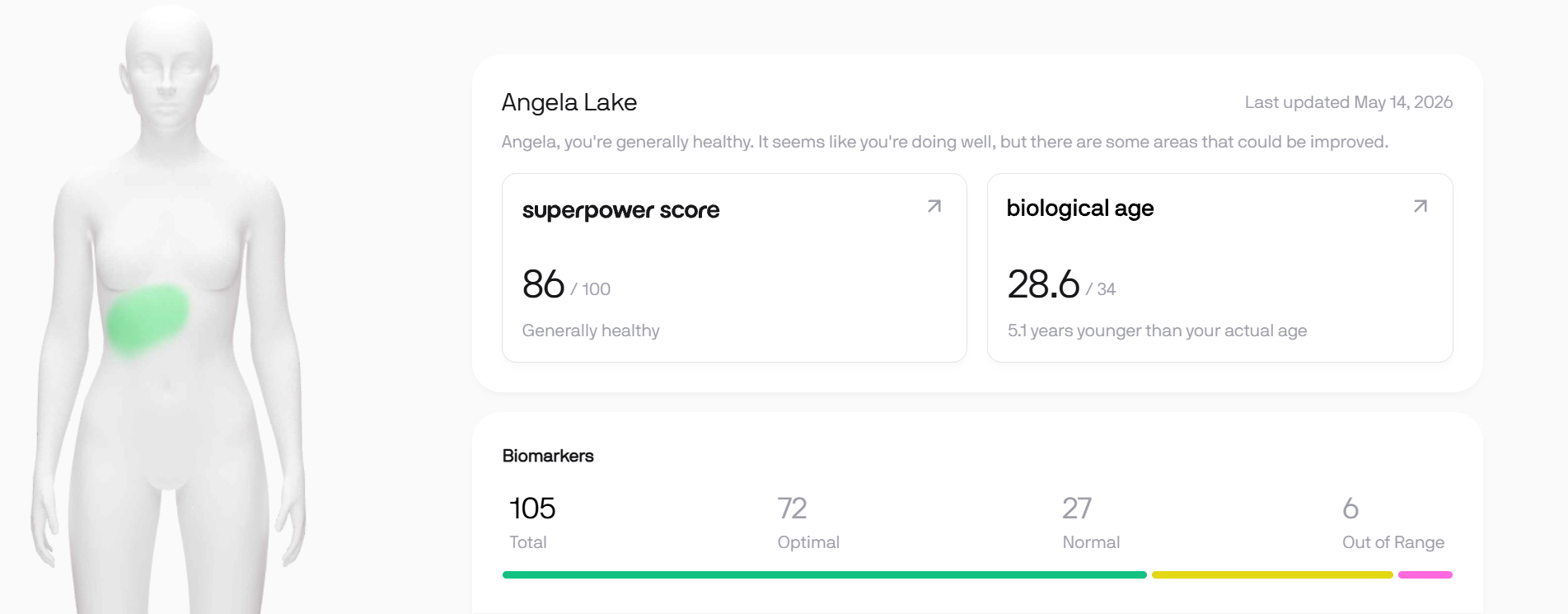
Vitamin D: 25 ng/mL (insufficient; want it 30+)
I've been supplementing, and D was still low in the "insufficiency" zone. The synthesis flagged that I live in Washington state where UVB exposure is limited for much of the year. Correct!, What I found clarifying was seeing how I might be feeling as a result of low D: fatigue, mood dips, slower recovery. I've been chalking those up to training load. Turns out vitamin D is probably causing more symptoms than my low-end iron, which I wouldn’t have known.
I scheduled a vitamin D injection for next week!
Iron Binding Capacity: 221 (low; reference range 250–450)
I’m not anemic, but for endurance athletes, the research is clear that ferritin and iron binding capacity thresholds that look "normal" on a standard panel are actually inadequate for the demands of high-volume training. My body knows something is off. Low iron binding capacity alongside normal-ish ferritin is a signal that my system is working harder than it should to hold onto what it has. (Thanks to the synthesis for explaining this in non-mumbo-jumbo terms for me!)
I ordered a different form of iron supplement to try, and I'm going to pair it with vitamin C and keep it away from caffeine (tips I haven't really dialed in before).
What I’m Curious About Next
I've had low D, low iron, and low B12 (historically) for years. I've supplemented, but the numbers stay stubbornly low. I'm starting to think the issue isn't the supplements, but absorption. I've had what I'd generously call… "digestive quirks" for a long time, and I think it's time to actually look into whether something upstream is keeping my gut from doing its job. That's my next appointment to make.
Hannah's Results
Hannah’s biological age was also a few years younger than she is, but she had some markers to work on, too. Her iron was lower than preferred too – a level that doesn't surprise her but does frustrate her, because every time she brings it up a doctor waves it off. (The threshold for "normal" and the threshold for "optimal for an endurance athlete ramping up for a 50k" are not the same number, but doctors don’t always think of that.)
The other flag was thyroid-related, some markers that the AI synthesis noted as possible early indicators worth watching and following up on. She's not very worried but is glad she knows to keep an eye on it, and a bit frustrated that this is information her regular healthcare hasn't surfaced.
That was our shared feeling, actually. Not doom or panic, but why is this so hard to access through normal channels?
On the AI Interface
I'll be honest: I liked the synthesis layer more than I expected to! It felt specific, not generic wellness copy, but customized to my actual numbers and context. The "Ask Superpower AI" chat feature is a cool idea that I think has real potential, but right now it's slow enough that I gave up waiting on a couple of quick questions. I expect that to improve very quickly. The core experience of seeing your results translated into how they might be affecting your body, what could be causing it, and a timeline to address it is already worth the trip to the lab.
Would I Recommend Superpower?
For women in endurance sports specifically? Yes, but then do something with what you learn.
The value isn't just the numbers. It's having language and context to walk into a doctor's office and advocate for yourself. Hannah and I both left with clearer pictures of what to ask for, what to push on, and what to actually address. But that’s the hard part – standing up for yourself! Having the data makes it so much easier. The test is the easy part. The follow-through is always on you.
So now, I have two summer goals: Enjoy a day running around Mount Saint Helens with Hannah, and get my iron and Vitamin D up to a range that can support all my miles!
Disclaimers: I received a complimentary Superpower baseline panel in exchange for an honest write-up. All opinions, results, and mild frustrations with the American healthcare system are my own. Nothing in this post is medical advice. I'm an ultrarunner and a writer, not a doctor. Talk to yours.