
Tips for Using Your Outdoor Adventures for Career Goals 🎯
My years directing a Girl Scout summer camp convinced me that being a summer camp counselor may be the hardest job in the world. And also, a job that can prepare you for infinite other, more “conventional” jobs.
Non-camp people don’t always get it. Society hears “camp counselor” and imagines Wet Hot American Summer, lazing by the waterfront, and making friendship bracelets amongst the trees. Really, being a camp counselor is managing every single chaotic aspect of a small city, but the city is populated by tiny humans whose parents could freak out if they get a scrape or two, the city has a super low budget, and you get only 2 hours a day to be off the clock.
I felt the same thing when I was a whitewater river guide, summed up by this graphic from one of my talks:
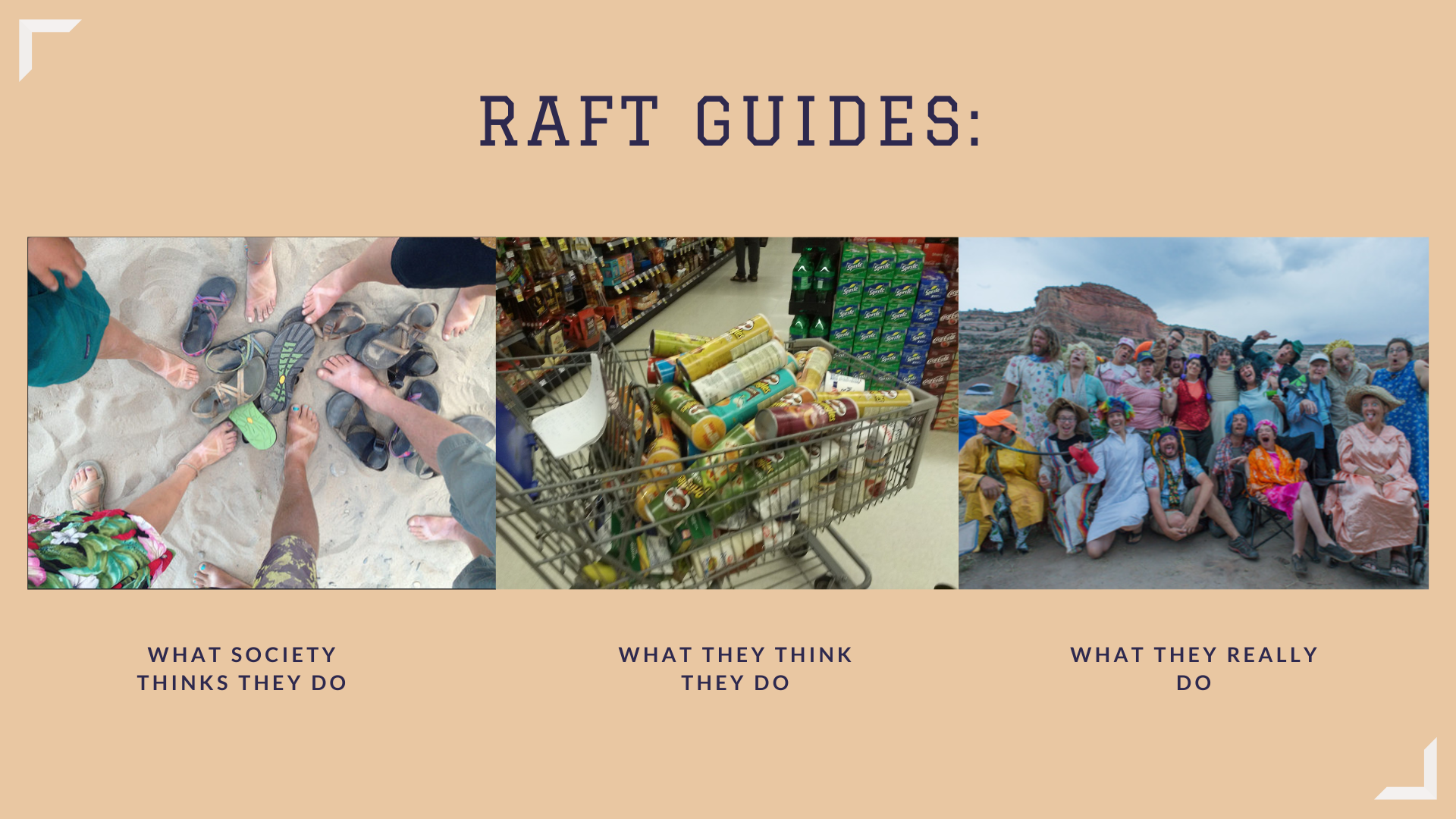
The stereotype was that I was getting paid to party on the water and work on my Chaco tan. What I was really doing was bringing together a diverse group of people who were told that outdoor adventure wasn’t for them, and showing them a corner of the world that would go on to change their lives.
And my resume would say I managed safety and logistics for multi-day wilderness expeditions, trained and supervised seasonal staff, designed and facilitated programming for populations with limited outdoor access, maintained a zero-incident record on Class III–V whitewater, and saved $4,000 from the summer food budget by implementing organized kitchen systems.
Mary-Jane Strom is now the CEO of Girl Scouts of Northern California, but she got her career start at Girl Scout summer camp. We spoke together on See Her Outside: Stories from Women Who Adventure about how to use your outdoor adventures and outdoor jobs for your greater career (plus her goal to open water swim in all 50 states, and some common misconceptions about Girl Scouts!).
Tips for Using Your Outdoor Adventures for Career Goals:
Translate daily chaos into skills an employer recognizes. At day camp, it’s not just helping campers get home. It’s 12 busses, 300 kids, 65 staff, and a tight timeline. AKA operations management. When hiking the PCT, it’s not just navigating trails. It’s problem-solving trail closures, avoiding lightning, planning your route. AKA decision-making under pressure. Vocabulary shifts help, not because the outdoor version isn’t impressive, but because the person reading your resume may have never been on a mountain. 🤷♀️
Use “Level 2” language to describe your accomplishments. When we compliment kids at camp, we ditch the Level 1 compliments (“nice job climbing that rock wall”) to naming who they’re becoming (“you showed your bravery on that rock wall”). You can do that for yourself! It’s not cheesy!
Lead with the outcome, not just the activity. This weekend, I’ll be guiding in the Grand Canyon. When these women go on to tell stories about the epic day, I hope they’ll start with, “We raised $10,000 for women’s wilderness scholarships by hiking Rim to Rim.”
Write down one full outdoor day. Pick any day from your outdoor job, your trail season, your camp summer, whatever, and write down everything that happened. You’ll find project management, risk assessment, team communication, and budget decisions hiding behind what the public would just see as “fun.”