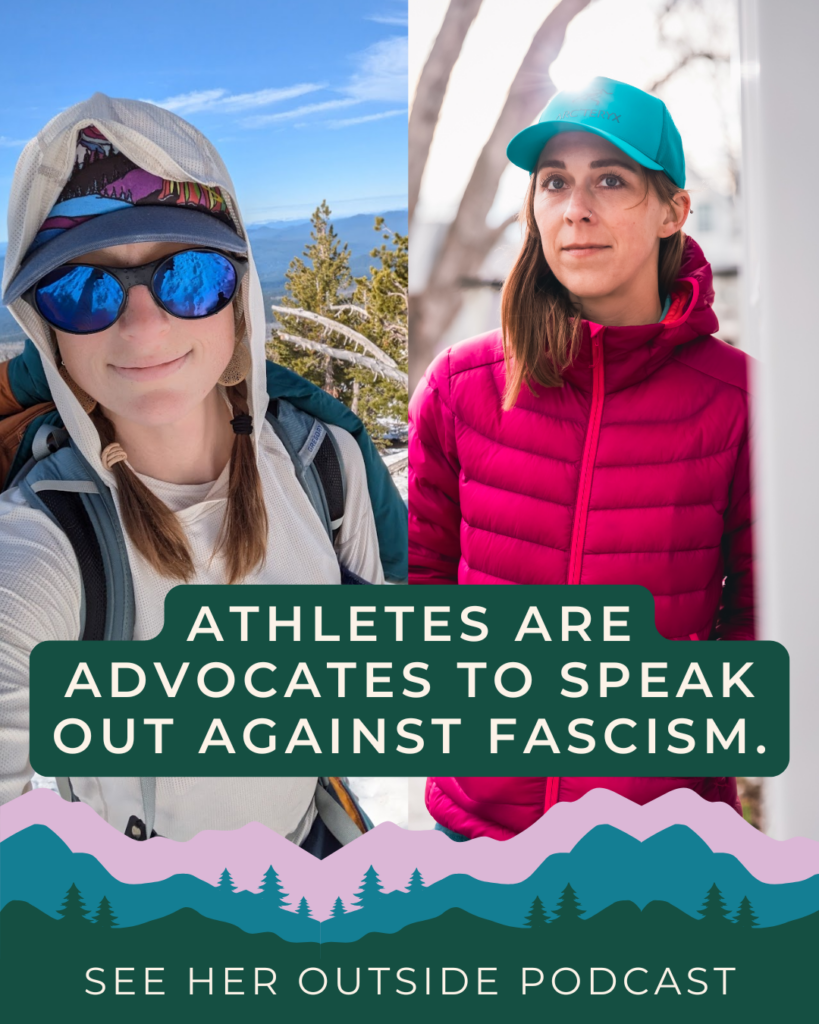
Athletes are Advocates to Speak Out Against Fascism: Tips for Speaking Up Even When It’s Scary | See Her Outside Podcast
Follow on Spotify, Subscribe on Apple Podcasts, Listen on Amazon, Pocket Casts, iHeartRadio, other platforms
This is a special, unedited episode with an urgent conversation. Host Angie Lake and former guest Colleen MacDonald sit down to talk about why athletes and outdoor enthusiasts need to be using their voices right now to counter fascism and discrimination in the United States.
This isn’t a conversation with all the answers wrapped in a bow. It’s a starting point and a reminder that the courage you use in your outdoor adventures is the same courage you can use to resist fascism.
If you’ve ever thought “I’m just an athlete” or “why does my voice matter?”, this episode is for you.
Colleen and Angie discuss:
Why outdoor athletes are uniquely positioned to advocate for justice
The parallels between athletic discomfort and advocacy discomfort
How to use your voice even when you don’t have all the answers
Why brands and sponsored athletes staying silent is so damaging
The importance of small businesses taking stands over corporate PR statements
Practical ways to take action: calling senators, donating, storytelling
How to show up imperfectly and keep going
Why everything, including your sport, is political
Takeaways
You’ve been training for this. The discomfort you push through in outdoor sports? That’s the same muscle you use for advocacy.
Call your senators. It takes under 5 minutes, and those numbers really matter.
Athletes are uniquely positioned to speak up because we:
Value outdoor access for everyone
Operate without guaranteed outcomes
Show up imperfectly and keep going
Trust there’s growth on the other side of fear
Everything is political. You can’t separate your sport from policy. Title IX is why women can play sports professionally. Policy affects your ability to recreate.
It’s never too late to start. Show up imperfectly. Stumble over your words. That’s okay.
Advocacy isn’t one-size-fits-all. Find the intersection of your strengths and the causes you care about.
Shop with small businesses. They’re more nimble and courageous in taking stands aligned with values.
Storytelling is advocacy. Stories with emotion help people understand and find common ground.
Resources Mentioned
5 Calls: links + scripts for calling your elected officials: https://5calls.org
Find your senators here: https://www.senate.gov/senators/senators-contact.htm
Find your representative here: https://www.house.gov/representatives/find-your-representative
Chop Wood, Carry Water: Substack of updates and small daily actions (+ scripts) for standing up for democracy: https://chopwoodcarrywaterdailyactions.substack.com
Immigrant defense project: news, printable cards, resources to help you be a good community member and help your neighbors : https://www.immigrantdefenseproject.org
Immigrant legal resource center: education, training and resources for community: https://www.ilrc.org
ICE Rapid Response: local numbers, connect with a rapid response team in your area https://icerr.com